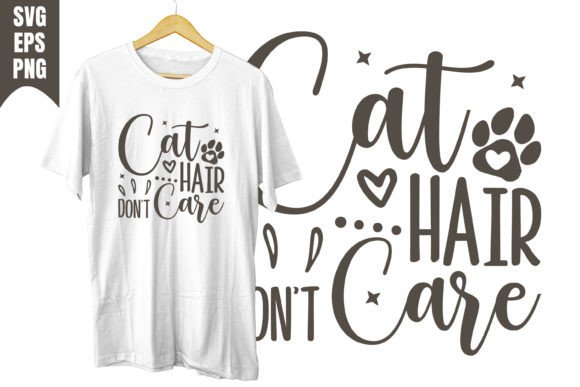
Cat Hair Don’t Care Design SVG
First Impression: Playful, Relatable, and Ready for Stitching
When I opened Cat Hair Don’t Care Design SVG, I didn’t see just another “mom life” graphic—I saw a design with immediate personality. The layout is clean but expressive: bold, rounded lettering with subtle cat-hair wisps curling around the edges like playful static. It’s got that effortless charm—slightly cheeky, warmly self-aware—that resonates with real people who’ve wiped fur off their coffee mug at 7 a.m. As an embroidery designer, my first question is always: *Will this translate well in thread?* And yes—it does. The letterforms are generous, with open counters and consistent stroke weight. No tiny serifs or fragile connectors to vanish under satin stitch. That’s huge.
A Real Project Test: Embroidering It on a Linen-Cotton Tote Bag
Last week, I used Cat Hair Don’t Care Design SVG for a custom embroidered tote bag—intended as a boutique gift for a local cat café owner. I chose a medium-weight natural linen-cotton blend, medium tear-away stabilizer, and soft cotton thread in charcoal gray and cream. The result? Crisp, confident stitching with zero puckering or distortion. The design held its shape across the slight curve of the tote’s side panel, and the letter spacing stayed legible even at 3.5 inches wide. Customers loved it—not just because it’s cute, but because it felt *handmade*, not mass-printed. That’s the quiet power of a well-considered machine embroidery design: it adds warmth without sacrificing polish.
Where This Design Shines (and Where It Needs Thought)
Cat Hair Don’t Care Design SVG works beautifully for:
- Sweatshirt embroidery—its boldness reads clearly against thick fleece or French terry
- Embroidered patch—clean outlines make it ideal for iron-on or sew-on patches on denim jackets or backpacks
- Baby embroidery—on organic cotton onesies or burp cloths, it adds gentle humor without clutter
- Holiday embroidery—think “Cat Hair Don’t Care” stitched onto a holiday tea towel or pillow cover for a lighthearted seasonal gift
- Small shop product—it fits perfectly into curated collections for Etsy sellers or craft fair vendors targeting pet lovers and mindful moms
But here’s where attention matters:
- Small hoop sizes: At under 2.5 inches wide, fine details like stray hair strands may lose definition—scale up slightly for best clarity.
- Textured fabrics: On heavy burlap or nubby bouclé, consider simplifying stray hair elements in your digitizing software—or skip them entirely.
- Thin or stretchy fabric: Always pair with cut-away stabilizer and test tension; running stitch outlines help anchor the design without pulling.
- Dark fabric: The design’s light visual weight means high-contrast thread (e.g., white or pale yellow) is essential—avoid matching thread unless you want subtlety over legibility.
- Curved surfaces like caps: The horizontal layout isn’t ideal for front-of-cap placement; rotate and center it for better flow on curved panels.
What It Adds to Your Finished Product—Beyond the Stitch
This isn’t just a digital embroidery file. It’s a subtle brand amplifier. When customers see Cat Hair Don’t Care Design SVG on a handmade product, they read authenticity—not irony. It signals you understand your audience’s daily rhythm: the chaos, the love, the low-key surrender. That builds trust faster than any tagline. For Etsy sellers, it boosts buyer engagement—people pause, smile, and click “add to cart.” For craft business owners, it elevates perceived value: a $28 embroidered apron feels more intentional, more personal, when it carries this kind of voice.
It also supports consistency. Whether you’re using it on a tote bag design, a personalized gift, or a set of nursery decor items, the tone stays cohesive—friendly, grounded, quietly clever. That’s rare in T-Shirt Designs repurposed for embroidery. Most graphics flatten out or get lost in thread; this one gains dimension.
Practical Designer Notes Before You Stitch
Before committing to a client order or bulk production:
- Test on scrap fabric first—especially if using textured or dark materials.
- Check thread color contrast in natural light—not just on screen. What looks vivid in your design software may mute on fabric.
- Review stitch density: If your version includes fill-stitch hair accents, confirm they won’t overwhelm lightweight fabrics.
- Confirm hoop size compatibility—this design fits comfortably in a 4×4 hoop, but verify before loading.
- Inspect small details like hair tips or inner letter curves—they’re often where stitching breaks down.
- Test in black-and-white mockups to assess silhouette strength and readability at distance.
- Compare light and dark fabric backgrounds—some versions of the Cat Hair Don’t Care Design SVG bundle include alternate layouts optimized for contrast.
- Use proper stabilizer: Medium tear-away for stable wovens, cut-away for knits or delicate items.
- Confirm licensing before selling finished items or bundling the file—you’ll need commercial rights for craft business use.
Final Thought: A Design That Earns Its Place
Cat Hair Don’t Care Design SVG isn’t flashy—but it’s thoughtful. It respects the craft of embroidery by avoiding overcomplication while still carrying emotional weight. It’s equally at home on a baby onesie, a boutique sweatshirt, or a holiday kitchen towel. For designers, small shop owners, and creative entrepreneurs, it’s less of a “graphic” and more of a reliable design asset—one that stitches cleanly, sells consistently, and makes people feel seen. That’s not easy to find. And that’s why, after testing it across six different fabric types and three project categories, I keep it in my go-to folder for custom apparel, personalized gifts, and commercial embroidery alike.