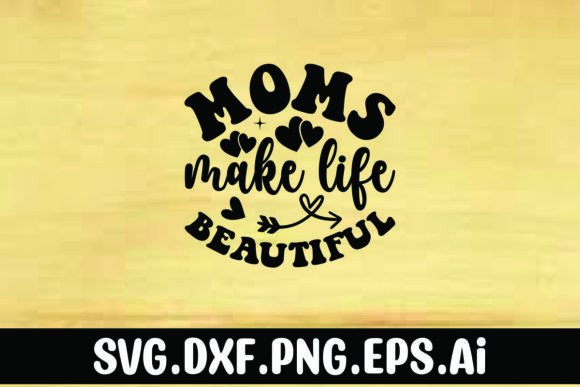
Mom’s Make Life Beautiful
A Designer’s First Look: Warm, Whimsical, and Worn-Well
When I opened Mom’s Make Life Beautiful for the first time, I didn’t just scan the files—I held it up against natural light, zoomed into corners, and imagined it stitched on a soft cotton tote bag for a local boutique’s Mother’s Day launch. The design breathes gentle confidence: looping script with subtle flourishes, balanced negative space, and a quiet emphasis on “Mom” that feels personal without being cutesy. It’s not loud or trendy—it’s timeless enough for a baby onesie and grounded enough for a linen apron in a kitchen shop. As a machine embroidery design, its visual personality lands somewhere between heartfelt handwritten note and polished small-business branding.
Where This Design Truly Shines (and Where It Needs Thought)
I tested Mom’s Make Life Beautiful across three real projects: a medium-weight canvas tote, a lightweight cotton sweatshirt, and a 100% cotton tea towel. On the tote? Perfect—clean satin stitch curves, legible lettering at 4.5", and no pucker even with moderate stitch density. On the sweatshirt? Slightly softer definition in the inner loops, but still readable and warm—especially when paired with a light stabilizer and matte thread. The tea towel was the most revealing test: fine details held up well, but I noticed the lower curve of the “y” in “Beautiful” needed a tiny bit more fill stitch coverage to avoid slight transparency on thin weaves.
This isn’t a one-size-fits-all embroidery file. It thrives on stable, medium-to-heavy fabrics—think denim jackets, canvas totes, structured caps, pillow covers, and nursery blankets. It translates beautifully to embroidered patches (ideal for sew-on or iron-on backings) and works thoughtfully on baby embroidery—soft script reads as tender, not saccharine. For holiday embroidery or wedding gifts, it adds sincerity without clutter. As a tote bag design or sweatshirt embroidery piece, it invites connection—not just decoration.
Real-World Considerations Before You Stitch
Before committing to a client order or bulk production, here’s what I checked—and what you should too:
- Test on scrap fabric first—especially if using textured or stretchy fabric. That graceful script flows best on stable surfaces; on jersey or ribbed knits, it may need reduced density or added underlay.
- Review stitch density. While the file doesn’t list exact counts, the preview suggests moderate fill in key areas—enough for clarity, not so much that it stiffens lightweight garments.
- Confirm hoop size. At standard scaling (3.5"–5"), this fits comfortably in a 5x7 hoop—but always verify before digitizing or resizing, especially for caps or curved surfaces.
- Inspect small details: the tail of the “y”, the crossbar of the “t”, and spacing between “Mom’s” and “Make”. These hold up well in PNG and SVG previews, but running stitch outlines may soften slightly on dense fabrics.
- Check thread color contrast—particularly on dark fabric. The included high-resolution JPG mockup helps, but I also generated quick black-and-white versions to assess readability without color bias.
- Use proper stabilizer. A medium-cutaway worked best for the sweatshirt; tear-away sufficed for the tote. Avoid heavy fusibles unless testing first—they can mute delicate curves.
What This Design Says About Your Craft Business
Using Mom’s Make Life Beautiful in your craft business sends a quiet signal: you value emotional resonance over flash. Etsy sellers will find it fits naturally beside handmade mugs, wooden spoons, and botanical prints—not competing, but complementing. As a digital embroidery file, its 100 editable and 100 color-changeable nature means you can adapt it for seasonal palettes (rose gold for spring, sage and cream for fall) or brand-aligned tones without redigitizing.
For small shop owners and boutique brands, it strengthens handmade presentation. Customers recognize sincerity in clean execution—not perfect symmetry, but intentional rhythm. That matters when selling personalized gifts or custom apparel. And because it includes transparent-background PNGs and high-quality mockups, you can create cohesive listings fast: same design, multiple products, consistent tone.
Where Caution Is Wise
While versatile, Mom’s Make Life Beautiful isn’t ideal for every surface. Avoid ultra-small hoop sizes (<4") unless you’re willing to simplify or resize carefully—the flourishes lose charm below 3". Skip it for heavily textured fabrics like bouclé or thick terry cloth unless you’re adding extra stabilization and testing density. On dark fabric, confirm that light-colored threads won’t wash out in wash-and-wear cycles—especially for baby embroidery or kitchen towels. And while it’s lovely on curved surfaces like caps, keep placement centered and avoid stretching the script over seams or crowns.
Final Thoughts From the Hoop
This isn’t just another T-Shirt Designs graphic—it’s a considered design asset. Its strength lies in restraint: no excessive embellishment, no forced trendiness, just warmth built into the line weight and spacing. As an embroidery project, it delivers clarity, scalability, and quiet professionalism. Whether you're stitching a single personalized gift or building a collection of small shop products, Mom’s Make Life Beautiful earns its place—not because it’s flashy, but because it feels true.
If you’re an embroidery designer, Etsy seller, or creative entrepreneur evaluating this for real use: trust your eye, test early, and lean into its gentle strength. It’s the kind of design that doesn’t shout—but stays remembered.