On That Mom Boss Hustle
Let’s be real: as a designer who’s stitched hundreds of phrases onto tote bags, baby onesies, and boutique sweatshirts, I don’t reach for a new embroidery file without asking three questions—does it hold up under stitching? Does it land with warmth and authenticity? And does it serve the *person* wearing or gifting it—not just the trend?
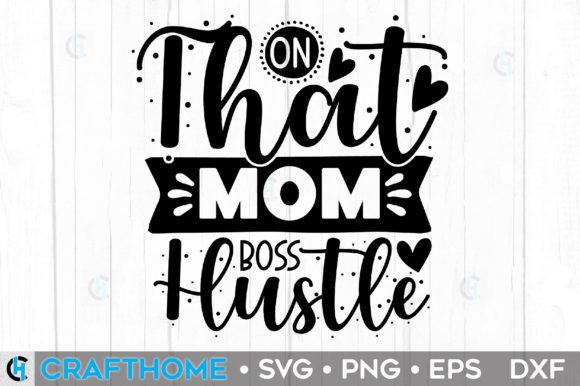
When I opened On That Mom Boss Hustle, my first thought wasn’t “cute font” or “viral phrase.” It was: This feels like something a mom would actually want on her apron while juggling school drop-offs and a side hustle—and still laugh at. The layout is clean but not sterile: bold, rounded sans-serif lettering with subtle bounce in the baseline, generous spacing between words, and that clever lowercase “t” in “that” adding quiet personality. It’s not shouting. It’s confident, grounded, and quietly joyful—exactly the tone you want when embroidering a handmade product meant to resonate emotionally.
Where This Design Earns Its Keep (and Where It Doesn’t)
I tested On That Mom Boss Hustle across several real projects: a medium-weight cotton canvas tote for a local parenting co-op, a heather grey French terry sweatshirt for an Etsy shop launch, and a 6-inch square patch sewn onto a linen kitchen towel. In every case, it held its shape beautifully—but only because I matched execution to intent.
It shines brightest on stable, mid-to-heavyweight fabrics where stitch definition stays crisp: think tote bags, structured aprons, unlined pillow covers, and baby blankets. On those surfaces, the letterforms read clearly even at 3.5–4 inches wide—the sweet spot for visibility without overwhelming the item. The design’s moderate width and open counters (the negative space inside letters like “o” and “a”) mean satin stitches lay flat, fill stitches breathe, and running-stitch outlines stay sharp. No crowding. No thread piling. Just clean, legible, handmade professionalism.
But here’s where attention matters: On That Mom Boss Hustle isn’t built for micro-embroidery. Don’t try it below 2.75 inches on a curved cap visor or a newborn onesie chest. The “B” in “Boss” and the “H” in “Hustle” have enough visual weight to survive scaling down—but the spacing tightens, and small hoop sizes (under 4x4) start compromising legibility. Likewise, avoid stretchy knits unless you’re using cutaway stabilizer *and* reducing stitch density manually. On thin cotton tees or lightweight rayon, the letterforms can blur without proper backing.
What Customers Actually Notice (and Why It Matters)
I’ve watched buyers pause at this phrase—not because it’s flashy, but because it lands with recognition. One customer told me she bought the embroidered tote “because it didn’t feel like a joke—it felt like permission.” That’s the quiet power of On That Mom Boss Hustle: it balances affirmation with authenticity. It doesn’t overpromise (“I’m crushing it!”) or undercut (“just surviving”). It says: I’m showing up, doing the work, and owning my rhythm.
That emotional resonance directly lifts perceived value. A $28 embroidered tea towel with this design sells faster than generic florals—not because the phrase is rare, but because it invites connection. For Etsy sellers and small shop owners, that means stronger conversion, better reviews (“perfect gift for my sister who just launched her bakery!”), and repeat customers who trust your curation. It also photographs well in natural light, holds up in printable mockups, and reads cleanly against both light and dark backgrounds—critical for digital product previews.
Practical Designer Notes Before You Stitch
- Test first. Run On That Mom Boss Hustle on scrap fabric matching your final project’s weight and texture—even if it’s just a corner swatch. Watch how the “O” closes, how the “S” curves, and whether the kerning stays consistent.
- Stabilizer isn’t optional. Use tear-away for stable wovens (totes, towels), cutaway for knits or layered garments (sweatshirts, baby caps). Skip it, and you’ll get puckering—not polish.
- Thread contrast is non-negotiable. Try black thread on oatmeal linen, navy on cream cotton, or mustard on charcoal. Avoid low-contrast combos (e.g., grey thread on heather grey)—they mute the design’s impact.
- Check licensing before selling. This is a digital embroidery file—not a physical product—and the listing states “digital download only.” Confirm whether your intended use (e.g., selling finished embroidered patches or reselling the design files) aligns with the creator’s terms. When in doubt, reach out.
- Review stitch density in your editing software. While the file includes SVG, PNG, EPS, and DXF formats—great for customization—the embroidery-ready version may need minor tweaks depending on your machine. Look for dense fill areas or overlapping outlines that could cause thread buildup.
- Think beyond apparel. This works brilliantly as an embroidered patch for denim jackets, a heat-transfer-ready graphic for custom mugs (via sublimation prep), or even a clean vector for hand-lettered nursery wall art—leveraging the included editable files.
Final Thought: It’s Not Just a Phrase—It’s a Fit
On That Mom Boss Hustle isn’t a “safe” T-Shirt Designs pick—it’s a considered one. It fits naturally into the world of thoughtful craft business, personalized gifts, and commercial embroidery where voice matters as much as visuals. It doesn’t try to be everything. It knows its lane: warm, capable, quietly proud. And when stitched with care onto the right fabric, in the right size, with the right stabilizer and thread? It doesn’t just sit on a tote bag or sweatshirt. It belongs there.
For designers, Etsy sellers, and makers building something real—not just scrolling through graphics—I recommend keeping On That Mom Boss Hustle in your working folder. Not as filler. But as a reliable, resonant, stitch-ready asset that earns its place on real products, given by real people, to people who truly get it.