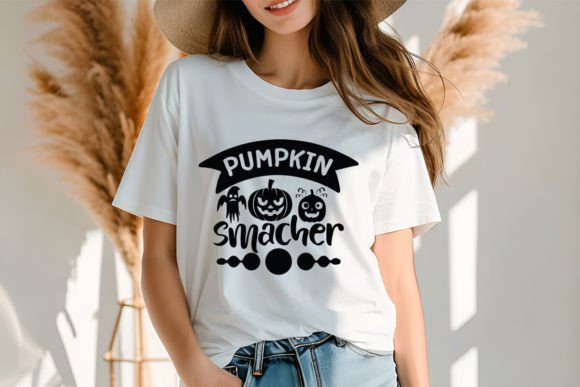
Pumpkin Smacher SVG Design
First Impressions: Playful, Punchy, and Perfectly Seasonal
When I opened the Pumpkin Smacher SVG Design for the first time—prepping it for a custom embroidered tote bag order—I immediately felt that familiar spark: this isn’t just another Halloween clipart knockoff. It’s got rhythm. The shape is bold but not overwhelming, with clean curves, confident negative space, and a cheeky, slightly lopsided grin that reads as handmade, not mass-produced. As a designer who’s stitched hundreds of seasonal graphics, I appreciate how the layout avoids visual clutter while still feeling full of personality. It leans into trend-aware minimalism without sacrificing charm—exactly what small shop owners and Etsy sellers need when standing out in a sea of pumpkin clichés.
A Real-World Test: From Screen to Stitch on a Linen-Cotton Tote
Last week, I used Pumpkin Smacher SVG Design to embroider a 7”-hoop version onto a natural linen-cotton blend tote for a local boutique’s Halloween launch. No applique—just direct stitch using medium-weight cutaway stabilizer and 40-weight polyester thread. The result? Crisp satin-stitched outlines held beautifully, and the fill stitches stayed dense and even across the curved pumpkin body. Customers loved how it looked *alive*—not stiff or pixelated—thanks to smart vector scaling and thoughtful stroke weight distribution. That’s where Pumpkin Smacher SVG Design earns its keep: it translates cleanly from digital embroidery file to tactile finished product, whether you’re stitching on a sweatshirt, baby onesie, or tea towel.
Where It Shines (and Where to Pause)
This design naturally excels in contexts where warmth, approachability, and seasonal relevance matter most:
- Custom apparel—especially relaxed-fit tees, crewneck sweatshirts, and oversized totes where the pumpkin’s friendly scale reads well at arm’s length
- Holiday embroidery for nursery decor, kitchen towels, or personalized gifts (think: “The Smith Family Halloween 2024” + Pumpkin Smacher SVG Design on a cotton pillow cover)
- Embroidered patch production, thanks to its closed shapes and moderate detail level—no tiny floating elements that snag during trimming
- Craft fair merchandise and small shop product lines where handmade presentation builds trust and repeat buyers
That said, I’d recommend caution with:
- Stretchy or ultra-thin fabrics—like jersey knits or lightweight rayon—unless paired with strong tear-away + topping stabilizer; the design’s smooth curves can distort if fabric shifts mid-stitch
- Curved surfaces like caps or beanies—the width-to-height ratio works best on flat or gently contoured areas; test hoop placement carefully before committing to a full run
- Dark fabric without contrast testing—even though the bundle includes white and black PNGs, always check how the final stitch density reads against your base color. On deep navy, I swapped to metallic gold thread for lift—and it paid off
- Tiny hoop sizes under 4”—while scalable, some subtle contour details soften below 3.5”, so reserve smaller versions for simple placements (e.g., corner of a handkerchief, not center chest)
Design Assets That Support Real Business Decisions
The file bundle gives practical flexibility: EPS for vector editing in Illustrator, SVG for Cricut/Silhouette users, and multiple PNGs (color, white, black) at print-ready 300 dpi—ideal for mockups, Etsy listings, or client proofs. As someone who juggles machine embroidery design, digital product previews, and physical samples daily, I value that I didn’t have to retrace or simplify anything. The paths are clean, anchor points are logical, and there’s no hidden raster layer muddying the vector integrity. That means less prep time, fewer redraws, and more confidence launching a new line of holiday embroidery—whether you're an Etsy seller adding five new designs or a craft business owner refreshing last year’s bestsellers.
What This Design Says About Your Brand—Without Saying a Word
Your customers don’t just buy a pumpkin—they buy your taste, your attention to detail, and your understanding of what feels special versus generic. Pumpkin Smacher SVG Design supports that perception because it balances trend awareness with timeless execution. It doesn’t shout—it winks. That subtlety elevates handmade product credibility, especially when paired with quality stitching and thoughtful presentation. I’ve seen buyers comment specifically on how “not cartoonish” it feels compared to other Halloween graphics—and that kind of organic engagement is gold for small shop owners building community through craft.
Five Practical Embroidery Designer Notes Before You Stitch
- Always test on scrap fabric first—especially if pairing with textured weaves or blending threads
- Review stitch density in your embroidery software; overly dense fills can pucker thin cottons, while sparse runs may lack impact on heavy fleece
- Confirm hoop size compatibility before digitizing—some versions may require minor resizing depending on your machine’s max hoop dimensions
- Inspect corners and inner curves manually—if you’re converting to machine embroidery design, ensure no sharp vectors create jump stitches or tension spikes
- Check licensing terms before selling finished items or reselling digital embroidery files; the bundle doesn’t specify commercial use limits, so verify before scaling for wholesale or POD
Final Thought: A Design That Works as Hard as You Do
Pumpkin Smacher SVG Design isn’t flashy—but it’s reliable, expressive, and quietly versatile. It fits seamlessly into a broader collection of T-Shirt Designs or Graphics without demanding attention, yet stands out when it needs to. For embroidery designers, craft business owners, and creative entrepreneurs building real products—not just pixels—this is the kind of asset that earns repeat use, positive reviews, and that quiet satisfaction of knowing your work looks as good stitched as it does on screen.