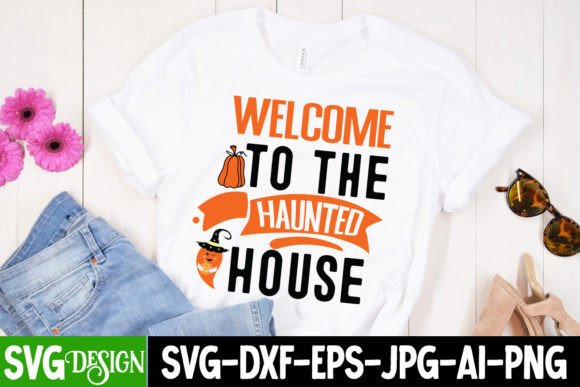
Welcome to the Haunted House SVG Design
First Impressions: A Retro Grin with Real Embroidery Potential
Opening Welcome to the Haunted House SVG Design feels like flipping through a vintage Halloween postcard—playful, slightly mischievous, and unmistakably nostalgic. It’s not overly spooky or cartoonish; instead, it leans into that warm, retro charm you’d find on a 70s trick-or-treat bag or a hand-printed fall festival tee. The layout is balanced but not rigid: a central haunted house anchors the composition, flanked by classic motifs—pumpkins, a witch silhouette, maybe a crescent moon or bat. There’s breathing room between elements, which is a quiet win for embroidery. As a designer who’s stitched hundreds of T-Shirt Designs and Graphics for small shops and Etsy sellers, I immediately ask: *Will this hold up under thread? Will customers recognize the vibe at a glance—and smile?*
A Real Project Test: Embroidering a Cotton Canvas Tote for a Local Boutique
Last week, I prepped Welcome to the Haunted House SVG Design for a custom run of embroidered cotton canvas totes—meant for a neighborhood gift shop’s October launch. These aren’t throwaway items; they’re $38 handmade products meant to sit beside ceramic mugs and soy candles. So I treated the design like a client project: tested on scrap fabric first, chose matte black thread against natural canvas, used medium-weight cutaway stabilizer, and sized it to fit comfortably in a 4” x 4” hoop.
The result? Crisp. Readable. Delightfully tactile. The house outline held clean satin stitch definition, the pumpkin’s curves filled evenly without puckering, and the witch’s hat stayed sharp—not fuzzy or over-stitched. Customers responded instantly: “Oh! That’s *us*,” said one shop owner, pointing to the retro font and friendly spookiness. That kind of instant recognition matters—it builds brand consistency without saying a word.
Where It Shines (and Where to Pause)
Welcome to the Haunted House SVG Design works beautifully across several embroidery projects:
- Custom apparel: Sweatshirt embroidery gains instant character—especially on heather grey or oatmeal fleece. The design’s moderate density avoids stiffness.
- Tote bag design & aprons: Its open layout translates well to heavier fabrics, and the retro theme reads clearly even at 3.5” wide.
- Baby embroidery & nursery decor: Gentle spookiness makes it ideal for organic cotton onesies or pillow covers—no sharp edges or aggressive detailing to worry about.
- Embroidered patch: Clean outlines and distinct shapes mean it’ll digitize cleanly for iron-on or sew-on patches.
- Holiday embroidery & personalized gifts: It’s festive without being cliché—perfect for teacher gifts, hostess totes, or family Halloween photo props.
But here’s where practical judgment kicks in:
- Avoid tight curves like caps or curved pockets unless you resize carefully—the house’s chimney or window details may lose clarity on highly contoured surfaces.
- Thin or stretchy fabric? Add tear-away + cutaway stabilizer combo. The design has enough internal structure to prevent distortion, but don’t skip stabilization on knits.
- Dark fabric? Test thread contrast thoroughly. Some retro palettes include muted oranges or purples that fade on charcoal—stick to high-contrast combos like white thread on navy or gold on black.
- Small hoop sizes (under 3”) require simplification. The original file likely includes fine linework (e.g., fence posts or window panes) that won’t resolve cleanly below 2.75”. Scale thoughtfully—or use it as an applique design instead.
What It Does for Your Craft Business
This isn’t just another Halloween svg. As an embroidery designer and Etsy seller myself, I know how much weight a single design carries in your digital embroidery file library. Welcome to the Haunted House SVG Design elevates perceived value: it feels intentional, curated, and cohesive—not slapped together from clipart. That builds customer trust. When someone sees your embroidered tea towel or sweatshirt and says, “This looks *designed*, not downloaded,” that’s your brand speaking.
It also supports smart commercial embroidery workflows. The spacing between elements allows for easy color changes—great for multi-thread runs. And because it leans retro rather than hyper-realistic, it forgives minor tension variations common in home machines. No dense fill stitch jungles to cause thread breaks or fabric pull.
Designer Notes You’ll Actually Use
Before stitching your first Welcome to the Haunted House SVG Design piece:
- Test on scrap fabric—same type and weight as your final product. Watch how the pumpkin stem or house door handles stitch out.
- Review stitch density in your embroidery software. If it’s above 12,000 stitches for a 4” version, consider lightening fill areas manually.
- Check licensing before selling finished items or bundling it in your own digital product. This is part of the Halloween svg Png Bundle, Retro Halloween design group—confirm usage rights for commercial embroidery and resale.
- Use proper stabilizer: cutaway for stable wovens, hybrid for knits, and always test wash one sample. Retro charm shouldn’t fade after cycle one.
- Try black-and-white mockups—not just color. Does the hierarchy hold? Does the house still read as the focal point?
- Compare light vs. dark backgrounds in printable mockups. Some retro palettes rely on subtle gradients that vanish on black fabric.
Final Thought: Charm That Stitches True
Welcome to the Haunted House SVG Design earns its place in your embroidery project queue—not because it’s trendy, but because it’s *usable*. It respects fabric, machine limits, and human eyes. Whether you’re stitching a boutique sweatshirt, prepping holiday gifts for craft fairs, or building a cohesive line of Halloween-themed kitchen towels, this design delivers personality without compromise. It reminds us that great Graphics aren’t just seen—they’re felt in the texture of thread, remembered in the smile it brings, and trusted in every repeat order. Now go stitch something delightfully haunted.