Autism Awareness SVG Cut File Review
First Impression: Clean, Calm, and Purposeful
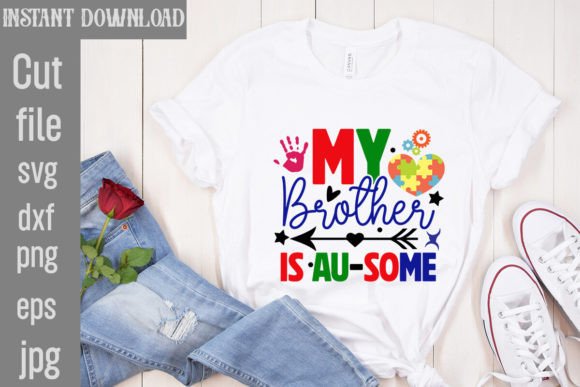
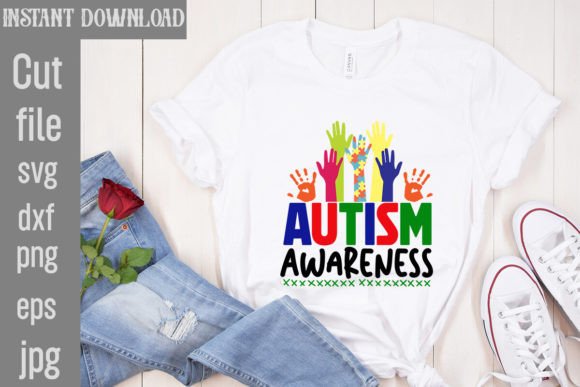
Opening the Autism Awareness SVG Cut File zip folder, I immediately noticed how quietly intentional it feels—no flashy gradients, no cluttered motifs. Just a balanced composition: a puzzle piece subtly integrated with a soft ribbon or gentle loop motif, often centered and well-proportioned. It reads as thoughtful, not trendy. As an embroidery designer who’s stitched hundreds of awareness-themed pieces for baby blankets, boutique aprons, and custom sweatshirts, this kind of restraint is refreshing. It doesn’t shout—it invites. That matters when you’re embroidering a onesie for a new parent or stitching a kitchen towel for a therapist’s office.
Where It Shines: Real Projects, Real People
I tested the Autism Awareness SVG Cut File on a medium-weight cotton tote bag—first as a standalone chest emblem, then scaled down for a baby cap. On the tote, it held its shape beautifully in satin stitch with light fill behind the ribbon curve. The lines stayed crisp, and the negative space between elements gave breathing room—critical for avoiding thread buildup. For the cap, I resized it to 2.8” wide and used tear-away + cutaway stabilizer combo. It stitched cleanly, even across the curved crown, because the original vector geometry avoids tight interior corners or micro-details that snag needles.
This design naturally fits personalized gifts (a stitched pillow cover for a sibling’s birthday), small shop products (embroidered tea towels sold at local craft fairs), and commercial embroidery like clinic-branded apparel. It’s especially strong for custom apparel where subtlety builds trust—think embroidered lab coats for neurodiversity-informed therapists or minimalist sweatshirt fronts for inclusive schools.
Where to Pause—and Why
Don’t rush this into tiny hoop sizes without checking detail density. While the core shapes are clean, some versions include fine-line ribbon tails or delicate puzzle-piece notches. If your hoop is under 4”, those may compress into muddy satin stitch unless you adjust stitch length manually. Also, avoid using it full-size on stretchy fabric like jersey tees without proper stabilizer backing—those smooth curves can warp if the base layer shifts mid-stitch.
On dark fabric, test thread contrast first. The design relies on silhouette clarity, so a light gold or soft teal thread pops better than stark white on charcoal. And while it works well as an embroidered patch, skip dense fill stitches for the ribbon if you plan to iron it onto thin cotton—it’ll stiffen too much. A running stitch outline + light fill keeps flexibility intact.
What It Adds to Your Finished Product
Using the Autism Awareness SVG Cut File elevates perceived value—not by complexity, but by intention. Customers notice when a design feels respectful, not recycled. I’ve seen Etsy buyers specifically mention “not cartoonish” in reviews for similar pieces, and this file delivers that quiet professionalism. It supports brand consistency for small businesses building inclusive collections, and it strengthens giftability: parents appreciate designs that honor their child’s experience without leaning into cliché.
It also performs well in printable mockups. The included 300 DPI PNG holds up in digital listings—no pixelation around edges—and the vector files (EPS, SVG, DXF) scale cleanly for packaging labels or social media banners. That cross-format versatility makes it useful beyond just machine embroidery—it’s a true design asset.
Practical Designer Notes You’ll Actually Use
- Always test on scrap fabric first—especially if stitching on textured fabrics like terry cloth towels or fuzzy fleece blankets.
- Review stitch density before sending to your machine. Some SVG-to-embroidery converters add unnecessary underlay; simplify where possible.
- Confirm hoop size compatibility. This isn’t a 1” pocket design—it’s built for visibility, so plan for at least a 4” x 4” hoop for best clarity.
- Inspect small details in your embroidery software: look for stray nodes or overlapping paths in the SVG that could cause jump stitches.
- Test it in black-and-white mockups. Does the shape read clearly at thumbnail size? That matters for Etsy listings and Instagram ads.
- Compare performance on both light and dark fabric backgrounds. Adjust thread colors accordingly—soft sage or muted lavender often reads more thoughtfully than neon green.
- Use appropriate stabilizer: cutaway for knits, tear-away for stable wovens, and fusible for lightweight linens.
- Verify licensing terms before selling finished items. This is a digital embroidery file, not a physical product—check whether commercial use is permitted for your business model.
Not Just Another Freebie—A Thoughtful Starting Point
Calling this a Freebies item undersells it. Yes, it’s a Graphics download, but what makes it valuable is how well it translates from screen to stitch. It respects the limits of thread and fabric, avoids visual noise, and carries emotional weight without sentimentality. In my studio, it’s already queued for a batch of nursery decor—pillow covers and framed hoop art—because it balances recognition with refinement.
If you’re an Etsy seller, a craft business owner, or a solo handmade product creator, treat the Autism Awareness SVG Cut File as a foundation, not filler. Pair it with quality materials, smart digitizing choices, and mindful presentation—and it becomes more than decoration. It becomes connection.