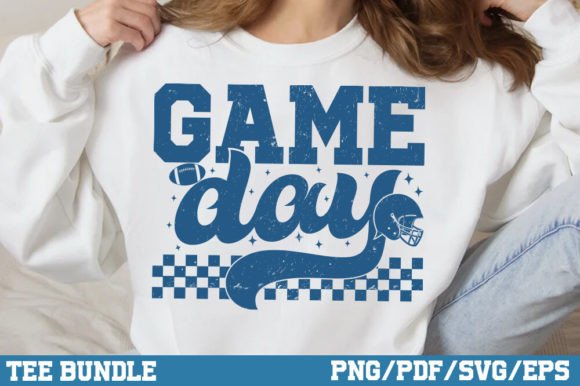
Football Season, Vintage Game Day Shirt
A Designer’s First Look: Nostalgia with Purpose
When I opened Football Season, Vintage Game Day Shirt, I didn’t just see a graphic—I saw a mood. Warm sepia tones, slightly weathered lettering, and that unmistakable mid-century football motif (think leather helmets, striped goalposts, and bold serif type) landed with quiet confidence. It doesn’t shout—it leans in, like a well-worn varsity jacket draped over a barstool. As a designer who’s stitched hundreds of custom pieces for Etsy sellers, boutique shops, and local sports leagues, I immediately asked: Where does this live best—not on screen, but in thread?
Real-World Test: A Custom Embroidered Tote for Game Day Pop-Ups
Last weekend, I used Football Season, Vintage Game Day Shirt to embroider a 12”x14” cotton canvas tote for a small-town fall festival booth. The client wanted something timeless—not trendy—that would appeal to parents, alumni, and tailgate crews alike. I chose a medium-density fill stitch for the main shield and a clean satin stitch for the outer border. The result? Crisp, legible, and surprisingly warm. Customers paused, smiled, and said things like, “My dad had one of these shirts in ’78.” That kind of emotional resonance is rare—and valuable.
Where This Design Truly Shines
- Sweatshirt embroidery: Its balanced weight and open negative space prevent puckering on fleece or French terry.
- Embroidered patch production: Clean outlines and minimal fine detail make it ideal for heat-seal or sew-on patches—no fraying corners or lost letterforms.
- Baby embroidery: On a soft cotton onesie, the vintage charm reads as sweet, not sporty—perfect for newborn photo sessions or nursery decor.
- Tote bag design & kitchen towel branding: Holds up beautifully at 4–5 inches wide; scales down without losing character.
- Holiday embroidery & personalized gifts: Paired with a monogram or year (“Est. 2024”), it becomes a meaningful keepsake—not just merch.
Where to Proceed With Care
This isn’t a one-size-fits-all embroidery file. Its vintage aesthetic comes with thoughtful constraints:
- Small hoop sizes (<6”): The full composition—including banner, helmet, and script—needs breathing room. For hoops under 5”, simplify: use just the helmet icon or the word “FOOTBALL” in standalone form.
- Textured or stretchy fabric: On ribbed knits or performance blends, test stabilizer first. A medium-weight cutaway kept the curves smooth on a fitted raglan tee.
- Dark fabric: The original PNG is print-ready at 300 dpi—but for embroidery, check contrast. I reworked the inner text in white thread against navy twill, and it popped cleanly. Avoid relying solely on the default grayscale preview.
- Curved surfaces (caps, beanies): The horizontal layout works best on front panels—not curved back straps. Consider rotating the design 90° for side-embroidered caps.
- Frequent washing: Dense fill areas (like the helmet shading) hold up well—but avoid tight satin-stitched borders on high-friction zones like pocket edges.
Design Assets That Support Real Craft Business Needs
The included files—PNG, EPS, SVG, and PDF—are thoughtfully delivered. As an embroidery designer, I reached first for the EPS and SVG when prepping for digitizing: vector paths gave me precise control over stitch placement, especially around the curved banner. The 4500×5400 PNG is excellent for printable mockups and Etsy listing visuals, but remember: a print-ready file isn’t automatically embroidery-ready. Always convert or digitize with your machine’s specs in mind. If you’re selling finished products, verify licensing terms—this Football Season, Vintage Game Day Shirt set appears intended for commercial embroidery use, but confirm before bundling into digital embroidery packs or subscription libraries.
What It Adds to Your Handmade Product—and Your Customer’s Experience
It elevates perceived value without demanding premium pricing. A $28 embroidered sweatshirt with this design feels intentional—not algorithmically generated. Customers recognize authenticity in the spacing, the subtle asymmetry, the way the “G” in “GAME” echoes old-school metal type. That builds trust. For Etsy sellers, it performs well in search because it’s specific (“vintage football”) yet broad enough to attract multiple audiences (sports fans, nostalgia buyers, gift shoppers). And for craft fairs? It sparks conversation—people point, recall memories, ask about sourcing. That’s engagement you can’t buy.
Practical Embroidery Designer Notes
- Test Football Season, Vintage Game Day Shirt on scrap fabric matching your final product—especially if using textured weaves or blends.
- Check thread color contrast early: try black, cream, and forest green on both light and dark backgrounds.
- Review stitch density visually—some areas (banner shadow, helmet highlights) may benefit from reduced density for breathability on apparel.
- Confirm hoop size compatibility before digitizing—full layout fits comfortably in a 6×10 hoop, but smaller versions need manual scaling.
- Inspect small details at 200% zoom: the tiny football stitching lines and serif terminals must remain legible after stitching.
- Run a black-and-white mockup to assess tonal balance—vintage doesn’t mean muddy.
- Use proper stabilizer: tear-away for stable cottons, cutaway for knits or lightweight linens.
- Verify whether your use case (personalized gift vs. wholesale boutique order) aligns with the license—when in doubt, contact the seller.
Final Thought: A Quiet Workhorse, Not a Flashy Gimmick
Football Season, Vintage Game Day Shirt won’t trend for 48 hours and vanish. It’s built for longevity—on fabric, on shelves, and in memory. Whether you’re an Etsy seller curating a fall collection, a craft business owner stocking holiday gifts, or a designer digitizing for local teams, this design earns its place by doing one thing exceptionally well: translating nostalgia into tactile, wearable warmth. It’s not loud. It’s not complicated. But in the right project—like that game-day tote, or a baby’s first football-themed blanket—it becomes quietly unforgettable.